If there’s one conversation we’ve been having repeatedly with UK manufacturers over the past few months, it’s about measurement. Not whether they need better measurement capabilities (most already know they do), but how to actually make it happen in 2026 when budgets are tight, skills are scarce, and the economic outlook remains cautiously optimistic at best.
The irony isn’t lost on us. At a time when precision matters more than ever—tighter tolerances, more complex geometries, stricter regulatory requirements—many manufacturers are asking whether they can afford to invest in better measurement systems. The real question, though, is whether they can afford not to.
Why 2026 Is Actually the Right Time
There’s always a reason to delay investment. The economic forecast isn’t certain. The Budget might bring new costs. Global trade remains complicated. But here’s what we’re seeing from manufacturers who are moving forward with measurement improvements: they’re the ones gaining competitive advantage right now, not waiting for perfect conditions that may never arrive.
The Make UK Executive Survey shows that despite all the challenges, nearly two thirds of manufacturers believe opportunities in 2026 outweigh the risks. More importantly, over half say that expanding products and services in response to customer needs is their biggest opportunity this year. You can’t expand effectively without the measurement capabilities to maintain quality as you diversify.
The manufacturers thriving in the current environment aren’t the ones with the biggest budgets or the most stable order books. They’re the ones who’ve invested strategically in capabilities that let them do more with what they have. Measurement sits right at the heart of that equation.
Understanding Where You Actually Stand
Before we talk about solutions, it’s worth being honest about where most UK manufacturers are with their measurement capabilities right now. We work with facilities across aerospace, automotive, medical devices, energy, and general engineering, and we see patterns.
Many are working with measurement equipment that’s perfectly functional but increasingly mismatched to current requirements. A CMM purchased fifteen years ago when your product mix was simpler and tolerances were looser. Manual inspection methods that were adequate when production volumes were lower. Quality labs geographically or operationally separated from production, creating delays and disconnects.
The challenge isn’t usually that existing systems have failed. It’s that requirements have evolved while measurement capabilities haven’t kept pace. Components have gotten more complex. Customer specifications have tightened. Regulatory documentation requirements have increased. The measurement approach that worked in 2015 or even 2020 might not be adequate for where you need to be in 2026.
Then there’s the data question. Modern manufacturing is increasingly about using measurement data to drive decisions, not just sorting good parts from bad. If your current measurement setup can’t feed useful data into your quality management systems and production analytics, you’re missing a significant opportunity.
The Range of Options Available
When manufacturers think about improving measurement capabilities, there’s often an assumption that it means buying a large, expensive coordinate measuring machine. That’s certainly one option, but it’s far from the only one.
At Wenzel UK, we work with a wide range of measurement solutions because different manufacturers face different challenges. Some need the comprehensive capability of a multi-sensor CMM. Others would benefit more from specialized gear measurement or CT scanning for complex internal geometries. Still others might get the most value from upgrading existing equipment or implementing better software to extract more insight from measurements they’re already taking.
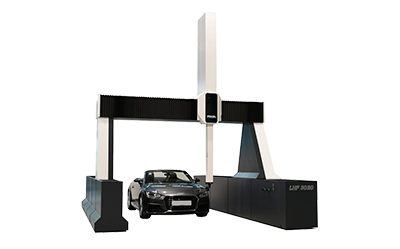
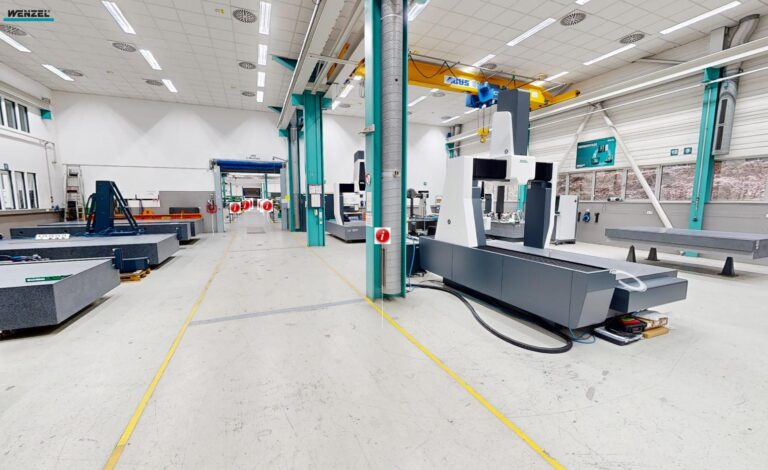
The CMM range alone covers everything from compact shop-floor systems like the LH-S series (which can be configured modularly to fit your exact space and requirements) through to large gantry systems for measuring substantial components. There are bridge CMMs, horizontal arm systems, and the new LH Hybrid that combines cubic and rotational measurement in a single platform.
Computed tomography has moved from being an exotic technology used primarily in aerospace to something practical across a much wider range of applications. The ability to see internal features without destructive testing, to inspect assembled components without disassembly, and to verify complex additive manufactured parts is increasingly relevant as products become more sophisticated.
Software deserves its own consideration. Our WM | Quartis measurement software has evolved significantly, particularly in the latest R2025-2 release. Enhanced temperature compensation, integrated roughness measurement, improved rotational scanning methods, and crucially, better connectivity for Industry 4.0 integration. Sometimes the best improvement isn’t new hardware; it’s getting more capability and insight from what you already have.
Service and support matter more than many manufacturers initially realize. The difference between a measurement system that delivers reliable results and one that becomes a source of frustration often comes down to proper calibration, maintenance, and having knowledgeable support available when questions arise. This is particularly relevant given the skills challenges facing UK manufacturing—when 46,000 vacancies remain unfilled and the sector is losing an estimated £4 billion in output annually due to skills shortages, having expert support for your metrology systems becomes even more valuable.
Making the Decision: What Actually Matters
The most successful projects start by focusing on specific problems or opportunities rather than generic capability upgrades.
Are you losing business because your current measurement capabilities can’t verify the tolerances customers are specifying? Are inspection bottlenecks limiting your production throughput? Are you spending excessive time and money on rework because problems aren’t caught early enough in your process?
Sometimes the driver is strategic. If you’re looking to move into new markets—medical devices, aerospace, EV components—that have stricter quality requirements, you need measurement capabilities that can support those standards.
Cost matters, obviously. But the conversation shouldn’t start with “how much can we afford to spend” as much as “what value would better measurement deliver.” We worked with an automotive supplier last year who was hesitant about investing in a shop-floor CMM. Their rejection rate was running at about 8%, which seemed manageable. But when we calculated the actual cost of that scrap—materials, machine time, labour, energy, plus the opportunity cost of production capacity wasted—the payback period was under a year.
Practical Paths Forward
If you’re serious about improving measurement capabilities in 2026, there are several practical approaches depending on your situation and constraints.
For manufacturers working with limited budgets or uncertain about exactly what they need, starting with a consultation and assessment makes sense. We can evaluate your current capabilities, understand your requirements, and help identify where improvements would deliver the most value. Sometimes this reveals that retrofitting or modernizing existing equipment is more cost-effective than buying new.
For facilities that know they need new capability but aren’t ready for a major capital expenditure, exploring leasing or phased implementation options can make projects feasible that otherwise wouldn’t be. It’s better to get the measurement capability you need in place and paying for itself through improved quality and reduced waste than to wait years for the perfect budget window.
For larger manufacturers or those making strategic moves into new markets, comprehensive solutions that integrate multiple measurement technologies with robust data management might be appropriate.
The key is matching the solution to the actual need rather than either under-investing (getting something cheap that doesn’t really solve the problem) or over-investing (buying capability you don’t need and won’t use).
The Support Equation
A measurement system is only valuable if it’s producing reliable results when you need them. That requires proper installation, calibration, training, and ongoing maintenance.
At Wenzel UK, this is where our Coalville facility and UK-based team become particularly relevant. When you need calibration, service, or technical support, you’re dealing with people who understand UK manufacturing environments and can respond appropriately.
Training matters more now than it used to, given the skills challenges across manufacturing. Operators need to understand not just how to run measurement programs, but how to interpret results, identify when something isn’t right, and make informed decisions based on measurement data.
Looking Forward
Better measurement capability sits right at the intersection of several critical needs. It reduces waste and cost, enables expansion into higher-value markets and more complex products, provides the data infrastructure needed for modern production analytics and Industry 4.0 initiatives, and helps maintain competitiveness even with limited workforce by making the people you have more effective.
Whether you’re upgrading existing equipment, expanding capacity, or exploring new measurement technologies entirely, the important thing is starting the conversation and planning for improvement rather than waiting for perfect conditions.
If you’re looking to improve your measuring capabilities in 2026, get in touch to start the conversation. We can assess where you are, discuss where you need to be, and plan a path forward that makes sense for your facility. The question isn’t whether measurement matters in modern manufacturing—it demonstrably does. The question is whether you’re going to have the capabilities you need to compete effectively.